Knowing how to spot weighted dice at the poker table is a critical security skill that every serious card room operator, game host, and observant player should master. Weighted and modified dice are among the oldest cheating tools in gaming history. But contrary to what many people assume, modern manufacturing techniques have made them far more sophisticated. A professionally manufactured set of weighted dice today is virtually undetectable by casual inspection.
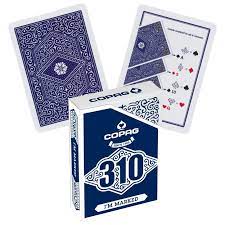
This guide explains exactly what weighted dice are from a mechanical engineering perspective, presents the three proven detection methods used by professional casino security teams worldwide, and describes the specific detection equipment we manufacture and sell to implement each method. We stock complete detection kits ranging from basic float test supplies to professional kits with digital measurement and statistical analysis tools.
What Are Weighted Dice? The Engineering Reality
A weighted die is not simply a heavier die. It is a precision-engineered cheating device that manipulates the fundamental physics of how a cube tumbles and settles. Weighted dice use internal metal inserts typically tungsten (density 19.3 g/cm³) or lead (density 11.34 g/cm³) positioned precisely off-center within the die body. This shifts the center of gravity away from the geometric center toward one specific face. When the die is rolled, this displaced center of gravity creates a consistent rotational bias: the heavy side tends to rotate downward under the influence of gravity, causing the opposite face to face upward when the die comes to rest. The performance of well-manufactured weighted dice is striking. A fair die has a 16.7 percent probability of landing on any given face. A properly weighted die biases the target face to appear 40 to 60 percent of the time more than triple the expected fair-die frequency. Over several hundred rolls, this systematic bias generates a substantial and increasingly reliable profit for the cheat. Modern weighted dice are manufactured to extreme tolerances that defeat casual detection, matching standard casino dice in size within 0.02mm, weight within 0.2 grams, edge sharpness, surface texture, and visual appearance.
Detection Method 1: The Float Test
The float test is the simplest, fastest, and most reliable detection method for weighted dice, requiring no electronic equipment. The physics principle is straightforward: a floating object in water will rotate until its center of mass is at the lowest possible point relative to the water surface. Fill a clear glass or graduated cylinder with room-temperature tap water. Drop the suspect die into the water and observe its behavior. A fair die will tumble randomly with no consistent orientation pattern. A weighted die will consistently rotate to show one specific face downward and the opposite face upward. Remove the die, try to force it into a different orientation, release it, and watch it rotate back to the same heavy-side-down orientation. Repeat the full test 10 times. If the same face orients downward 7 or more times out of 10 trials, you have identified a weighted die with high confidence. For lightly weighted dice that may not produce definitive results in plain water, dissolve table salt in the water to increase fluid density. Higher-density fluid provides greater buoyancy, which makes the center-of-gravity bias more pronounced. Our professional float test kits include pre-measured saline packets for this purpose.
Detection Method 2: Caliper Measurement
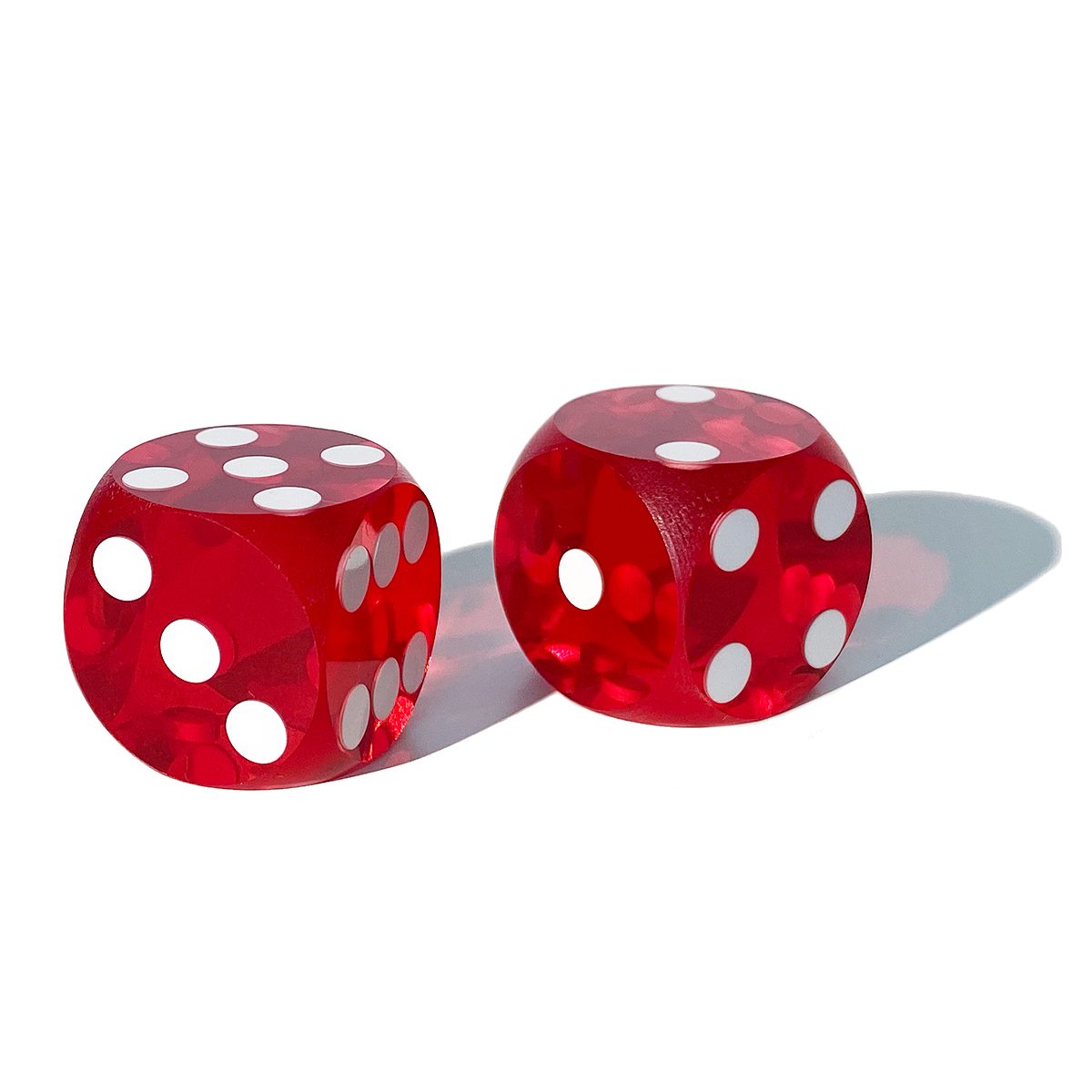
In addition to internal weighting, some loaded dice are also shaved. One or more faces are ground down by a fraction of a millimeter to create a shape bias that complements the weight bias. A die that is 0.1mm shorter in one dimension than the other two will tend to land with the shorter dimension oriented vertically. Use a professional digital caliper accurate to 0.01mm or better. Measure each of the three dimensions of the die length, width, and height at three measurement points per dimension, near each edge and at the center. Record all nine measurements. Compare the average values for each dimension. Any variation greater than 0.05mm between dimensions indicates shaving. Document your measurements with photographs showing the caliper reading at each measurement point for evidence purposes. We include a professional-grade digital caliper with 0.01mm accuracy, zero-reset function, and metric or imperial switchable display in our Professional and Complete detection kits.
Detection Method 3: Statistical Roll Analysis
Statistical analysis is the most rigorous detection method and provides quantitative confidence levels that the other methods cannot match. Roll the suspect die a minimum of 200 times under controlled conditions using a dice cup or tower to ensure random initial conditions. Record the upward-facing face for every roll. Calculate the chi-square statistic comparing your observed frequency distribution against the expected uniform distribution. For 200 rolls, a chi-square value above approximately 15.09 indicates that the observed distribution deviates from fairness with 99 percent statistical confidence. This means there is less than 1 percent probability that a fair die would produce a distribution this extreme purely due to random chance. Our detection kits include a pre-formatted chi-square analysis spreadsheet template and a printed instruction card showing the critical chi-square values for different roll counts at the 95, 99, and 99.9 percent confidence levels.
Detection Kits We Stock
- Basic Dice Detection Kit: Calibrated clear float test cylinder, saline solution packets, printed procedure card, and chi-square analysis template on USB drive.
- Professional Dice Detection Kit: Basic kit plus professional digital caliper with calibration certificate, dice inspection magnifier with 10x magnification and LED illumination, evidence documentation forms.
- Complete Security Detection Kit: Professional kit plus IR detector scope for marked card inspection, RF bug detector for camera sweeps, professional UV light tester for luminous ink and tamper detection, all in a rugged waterproof carrying case.
Protect your game with professional dice detection equipment. Every kit includes printed training materials and our direct support contact. Bulk pricing available for multi-room operations.